
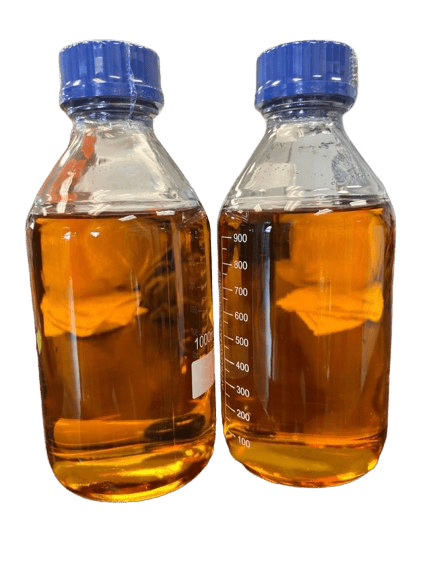
Buy Cannabidiol (CBD) Cas 13956-29-1
Buy Cannabidiol (CBD) Cas 13956-29-1
Cannabidiol (CBD) is a phytocannabinoid, one of 113 identified cannabinoids in Cannabis, along with tetrahydrocannabinol (THC), and accounts for up to 40% of the plant’s extract.[17] Medically, it is an anticonvulsant used to treat two rare forms of childhood epilepsy.[4] It was discovered in 1940. Clinical research on CBD has included studies related to the treatment of anxiety, addiction, psychosis, movement disorders, and pain, but there is insufficient high-quality evidence that CBD is effective for these conditions.[18][19][20] CBD is sold as a herbal dietary supplement and promoted with unproven claims of particular therapeutic effects.[21]
Cannabidiol can be taken internally in multiple ways, including by inhaling cannabis smoke or vapor, swallowing it by mouth, and through use of an aerosol spray inside the cheek.[22][23] It may be supplied as CBD oil containing only CBD as the active ingredient (excluding THC or terpenes), CBD-dominant hemp extract oil, capsules, dried cannabis, or prescription liquid solution.[4][20] CBD does not have the same psychoactivity as THC,[24][25] and can modulate the psychoactive effects of THC on the body if both are present.[17][24][26][27] Conversion of CBD to THC can occur when CBD is heated to temperatures between 250–300 °C, potentially leading to its partial transformation into THC.[28]
In the United States, the cannabidiol drug Epidiolex was approved by the Food and Drug Administration (FDA) in 2018, for the treatment of two seizure disorders.[4] While the 2018 United States farm bill removed hemp and hemp extracts (including CBD) from the Controlled Substances Act, the marketing and sale of CBD formulations for medical use or as an ingredient in dietary supplements or manufactured foods remains illegal under FDA regulation, as of 2024.[29][30]
Medical uses
Epilepsy
In the United States, the Food and Drug Administration (FDA) has indicated only one brand of prescription cannabidiol, sold under the brand name Epidiolex, for the treatment of seizures associated with Dravet syndrome, Lennox–Gastaut syndrome, or tuberous sclerosis complex in people one year of age and older.[31][32][33] While Epidiolex treatment is generally well tolerated, it is associated with minor adverse effects, such as gastrointestinal upset, decreased appetite, lethargy, sleepiness, and poor sleep quality.[4][32][34][33]
In the European Union, Epidyolex is indicated for use as adjunctive therapy of seizures associated with Lennox–Gastaut syndrome or Dravet syndrome, in conjunction with clobazam, for people aged two years of age and older.[11] In 2020, the label for Epidiolex in the US was expanded to include seizures associated with tuberous sclerosis complex. Epidiolex/Epidyolex is the first prescription formulation of plant-derived cannabidiol approved by regulatory bodies in the US and Europe.[35]
Antimicrobial property
CBD demonstrates potent antimicrobial properties primarily against Gram-positive bacteria, including several ESKAPE pathogens, by disrupting their cell membrane.[36] While generally ineffective against Gram-negative bacteria due to their protective outer membrane, CBD has shown some activity against specific Gram-negative pathogens like Legionella pneumophila, Moraxella catarrhalis, and Neisseria species. The efficacy of CBD has been demonstrated in topical applications using ex vivo pig skin and mouse models, highlighting its potential as a therapeutic agent.[37][36]
Other uses
Health benefits for CBD beyond its approved medical uses are unproven; there are potential risks like liver damage and drug interactions if used during pregnancy or breastfeeding.[38][21]
CBD may help with pain, sleep, and addiction, potentially serving as a non-intoxicating alternative to opioids, but clinical evidence is limited and legal regulations are complex.[20][39]
There is very limited evidence on CBD use in mental disorders, and current studies do not show clear benefits for treating any mental illness or disorder.[19]
CBD is strongly advised against during pregnancy or breastfeeding due to unknown effects on fetal and infant development.[38]
Non-intoxicating effects
Cannabidiol does not appear to have any intoxicating effects[40] such as those caused by ∆9-THC in cannabis, but it is under preliminary research for its possible anxiolytic and antipsychotic effects.[19][20][25] As the legal landscape and understanding about the differences in medical cannabinoids unfolds, experts are working to distinguish “medical cannabis” (with varying degrees of psychotropic effects and deficits in executive function) from “medical CBD therapies”, which would commonly present as having a reduced or non-psychoactive side-effect profile.[20][25][41]
Various strains of “medical cannabis” are found to have a significant variation in the ratios of CBD-to-THC and are known to contain other non-psychotropic cannabinoids.[42] Any psychoactive cannabis, regardless of its CBD content, is derived from the flower (or bud) of the genus Cannabis. As defined by US federal law, non-psychoactive hemp (also commonly termed “industrial hemp“), regardless of its CBD content, is any part of the cannabis plant, whether growing or not, containing a ∆9–tetrahydrocannabinol concentration of no more than 0.3% on a dry-weight basis.[43] In the United States, certain standards are required for legal growing, cultivating, and producing the hemp plant, but there are no federal standards for quality being enforced in the hemp industry. Certain state regulations are in place, but vary state to state.[44] For instance, the Colorado Industrial Hemp Program registers growers of industrial hemp and samples crops to verify that the dry-weight THC concentration does not exceed 0.3%.[43]
Available forms
Nabiximols (brand name Sativex), an oromucosal spray made of a complex botanical mixture containing cannabidiol (CBD), delta-9-tetrahydrocannabinol (THC), and additional cannabinoid and non-cannabinoid constituents from cannabis sativa plants, was approved by Health Canada in 2005, to treat central neuropathic pain in multiple sclerosis, and in 2007, for cancer-related pain.[45] In New Zealand, Sativex is “approved for use as an add-on treatment for symptom improvement in people with moderate to severe spasticity due to multiple sclerosis who have not responded adequately to other anti-spasticity medication.”[46]
Epidiolex (Epidyolex in Europe) is an orally administered cannabidiol solution.[4][11] It was approved in 2018 for treatment of two rare forms of childhood epilepsy, Lennox–Gastaut syndrome and Dravet syndrome, and seizures associated with tuberous sclerosis complex.[4][11] In the US, it is approved in these indications for people one year of age and older.[4]
Side effects
Research indicates that cannabidiol may increase adverse effects of THC, particularly those causing intoxication and sedation, but only at high doses.[47] Safety studies of cannabidiol showed it is well tolerated, but may cause fatigue, somnolence, sedation, diarrhea, or changes in appetite as common adverse effects, with the most common being somnolence and sedation. Side effects of CBD are dose related.[48] Epidiolex documentation lists sleepiness, insomnia and poor quality sleep, decreased appetite, diarrhea, and fatigue.[4][49]
In November 2019, the US Food and Drug Administration (FDA) issued concerns about the safety of cannabidiol, stating that CBD use has potential to cause hepatotoxicity, interfere with the mechanisms of prescription drugs, produce gastrointestinal disorders, or affect alertness and mood.[50] In 2020–2023, the FDA updated its safety concerns about CBD,[51] acknowledging the unknown effects of protracted use, how it affects the developing brain, fetus, or infants during breastfeeding, whether it interacts with dietary supplements or prescription drugs, whether male fertility is affected, and its possible side effects, such as drowsiness.[52]
As of September 2019, 1,085 people contacted US poison control centers about CBD-induced illnesses, doubling the number of cases over the 2018 rate and increasing by nine times the case numbers of 2017.[53] Of cases reported in 2019, more than 33% received medical attention and 46 people were admitted to a hospital intensive care unit, possibly due to exposure to other products, or drug interactions with CBD.[54]
In 2022, the FDA stated that “scientific studies show possible harm to the male reproductive system, including testicular atrophy, harm to the liver, and interactions with certain medications. The FDA has not found adequate information showing how much CBD can be consumed, and for how long, before causing harm. This is particularly true for vulnerable populations like children and those who are pregnant.”[55]
Interactions
Laboratory evidence indicated that cannabidiol may reduce THC clearance, increasing plasma concentrations which may raise THC availability to receptors and enhance its effect in a dose-dependent manner.[56][57] In vitro, cannabidiol inhibited the activity of voltage-dependent sodium and potassium channels, which may affect neural activity.[58] A recent study using X-ray crystallography showed that CBD binds inside the sodium channel pore at a novel site at the interface of the fenestrations and the central hydrophobic cavity of the channel. Binding at this site blocks the transmembrane-spanning sodium ion translocation pathway, providing a molecular mechanism for channel inhibition, which could contribute to a reduced excitability.[59] A small clinical trial reported that CBD partially inhibited the CYP2C-catalyzed hydroxylation of THC to 11-OH-THC.[60] Little is known about potential drug interactions, but CBD mediates a decrease in clobazam metabolism.[61] Work with human liver microsomes shows that cannabidiol inhibits CYP3A5 and CYP3A4 to some degree.[62]
Pharmacology
Pharmacodynamics
In vitro, cannabidiol has low affinity for, and acts as a negative allosteric modulator of the CB1 cannabinoid receptor[63][64]
Cannabidiol may be an antagonist of GPR55, a G protein-coupled receptor and putative non-homologous CB3 cannabinoid receptor shown by in vitro studies to be widely distributed in the brain.[65][66][67] Cannabidiol may interact with various neurotransmitters, such as serotonin, dopamine, and GABA.[65][66][68]
As of 2024, the cellular effects and mechanisms of cannabidiol in vivo are unknown,[4][11] as research to date has been inconclusive and based on laboratory studies.[65] The anticonvulsant effects provided by cannabidiol (Epidiolex) in people with certain forms of epilepsy do not appear to involve cannabinoid receptors.[4] A possible mechanism for the effects of cannabidiol on seizures is by affecting the neuronal movement of calcium in brain structures involved in the excessive electrical activity of seizures.[11]
Pharmacokinetics
The oral bioavailability of cannabidiol is approximately 6% in fasting state and 36.5–57.3% in fed-state[69] in humans, while its bioavailability via inhalation is 11–45% (mean 31%).[12][13][69][70] The oral bioavailability of cannabidiol varies based on several factors such as formulation,[70] dose, and food intake.[69] The sublingual bioavailability of cannabidiol is approximately 12–35%.[14] The elimination half-life of cannabidiol in blood is 56–61 hours after oral doses twice per day over 7 days.[4] Based on the pharmacokinetic analysis of long-term dosing of cannabidiol in humans, the terminal elimination half-life is estimated to be >134 hours.[69] Cannabidiol is metabolized in the liver as well as in the intestines by cytochrome P450 enzymes.[4][66]
Chemistry
At room temperature, cannabidiol is a colorless crystalline solid.[71] In strongly basic media and the presence of air, it is oxidized to cannabinodiol (CBND) and a quinone called HU-331.[72] Under acidic conditions it cyclizes to a multitude of products including THC-9 and iso-THC ,[73][74] which also occurs during pyrolysis,[75] and during smoking.[28][76] The synthesis of cannabidiol has been accomplished by several research groups.[77][78][79]

Overview
| Category | Compound | Description |
|---|---|---|
| Analog | 4′-Fluorocannabidiol | fluorinated cannabidiol derivative of CBD |
| Analog | Cannabidibutol (CBDB) | an analogue to tetrahydrocannabutol (THCB) |
| Analog | Cannabidiol diacetate | a semi-synthetic derivative of CBD |
| Analog | Cannabidiol dimethyl ether (CBDD) | an analog of CBD |
| Analog | H4-CBD | a structural analog of CBD |
| Analog | HU-320 | a structural analog of CBD |
| Analog | KLS-13019 | a structural analog of CBD |
| Homologue | 8,9-Dihydrocannabidiol (H2CBD) | synthetic derivative of CBD |
| Homologue | Cannabidiorcol (CBD-C1) | a homologue of CBD |
| Homologue | Cannabidiphorol (CBDP) | the heptyl-homologue of CBD |
| Homologue | Cannabidivarin (CBDV) | a homologue of CBD |
| Homologue | CBD-DMH | synthetic homologue of CBD |
| Homologue | Δ-6-Cannabidiol | a positional isomer of CBD |
| Isomer | Abnormal cannabidiol | a synthetic regioisomer of CBD |
| Metabolite | 7-Hydroxycannabidiol (7-OH-CBD) | an active metabolite of CBD |
| Precursor | Cannabidiolic acid (CBDA) | precursor to CBD |
Cannabidiol (CBD, (–)-CBD, CAS Number: 13956-29-1)
This product requires an Australian government issued permit to hold or possess.
Cannabidiol is a non-psychoactive cannabinoid found in cannabis that has efficacy for a wide range of medical conditions including epilepsy, bipolar disorder, inflammation, and cancer. This certified Snap-N-Spike® solution is suitable as starting material in preparation of calibrators or controls for a variety of LC/MS or GC/MS applications from forensic analysis and clinical toxicology to pharmaceutical research.
13956-29-1(CANNABIDIOL) Product Description
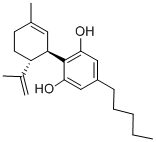 13956-29-1
(-)-2-[(3R,4R)-p-Mentha-1,8-dien-3β-yl]-5-pentylresorcinol
C07578
Methanol( test Cannabidiol 1.0 mg/mL)
(-)-trans-2-p-mentha-1,8-dien-3-yl-5-pentylresorcinol
(-)-trans-Cannabidiol
1,3-Benzenediol,2-[(1R,6R)-3-Methyl-6-(1-Methylethenyl)-2-cyclohexen-1-yl]-5-pentyl-
CBD,CANNABIDIOL
Cannabidiol (exempt preparation)
CANNABIDIOL Property
| Melting point: | 62-63°C |
| alpha | D27 -125° (0.066 g in 5 ml 95% ethanol); D18 -129° (c = 0.45 in ethanol) |
| Boiling point: | bp2 187-190° (bath temp 220°); bp0.001 130° |
| Density | d440 1.040 |
| refractive index | nD20 1.5404 |
| Flash point: | 11 °C |
| storage temp. | 2-8°C |
| solubility | Soluble to 75 mM in ethanol and to 75 mM in DMSO |
| form | powder |
| color | White |
| Major Application | pharmaceutical |
| Cosmetics Ingredients Functions | ANTI-SEBUM SKIN PROTECTING ANTIOXIDANT SKIN CONDITIONING |
| InChI | 1S/C21H30O2/c1-5-6-7-8-16-12-19(22)21(20(23)13-16)18-11-15(4)9-10-17(18)14(2)3/h11-13,17-18,22-23H,2,5-10H2,1,3-4H3/t17-,18/m0/s1 |
| InChIKey | QHMBSVQNZZTUGM-ZWKOTPCHSA-N |
| LogP | 6.600 (est) |
| EPA Substance Registry System | 1,3-Benzenediol, 2-[(1R,6R)-3-methyl-6-(1-methylethenyl)-2-cyclohexen-1-yl]-5-pentyl- (13956-29-1) |
Safety
| Hazard Codes : | F,T |
| Risk Statements : | 11-23/24/25-39/23/24/25 |
| Safety Statements : | 36/37-45-16-7 |
| RIDADR : | UN 1230 3/PG 2 |
| WGK Germany : | 1 |
| RTECS : | VH1600000 |
CANNABIDIOL Suppliers
(-)-2-[(3R,4R)-p-Mentha-1,8-dien-3β-yl]-5-pentylresorcinol C07578 Methanol( test Cannabidiol 1.0 mg/mL) (-)-trans-2-p-mentha-1,8-dien-3-yl-5-pentylresorcinol (-)-trans-Cannabidiol 1,3-Benzenediol,2-[(1R,6R)-3-Methyl-6-(1-Methylethenyl)-2-cyclohexen-1-yl]-5-pentyl- CBD,CANNABIDIOL Cannabidiol (exempt preparation) cannabidiol (CBD) 2-((1R,6R)-6-Isopropenyl-3-methyl-cyclohex-2-enyl)-5-pentyl-benzene-1,3-diol CBD crystal CAS13956-29-1 CBD Oil Canabidiol 100% Natural Organic Hemp CAS13956-29-1 99.99% CBD Cannabidiol isolate Powder Natural hemp extract CBD isolate CANNABIDIOL Nano Liposomal Cannabidiol NanoActive Cannabidiol ,(1r-trans)- 1,3-Benzenediol, 2-[3-methyl-6-(1-methylethenyl)-3-cyclohexen-1-yl]-5-pentyl- 2-(3-methyl-6-(1-methylethenyl)-2-cyclohexen-1-yl)-5-pentyl-3-benzenediol 2-(6-Isopropenyl-3-methyl-2-cyclohexen-1-yl)-5-pentyl-1,3-benzenediol 8-dien-3-yl-5-pentyl-2-p-mentha-(-)-(e)-resorcino delta1(2)-trans-Cannabidiol Resorcinol, 2-p-mentha-1,8-dien-3-yl-5-pentyl- Resorcinol, 2-p-mentha-1,8-dien-3-yl-5-pentyl-, trans-(-)- CANNABIDIOL CBD 2-[1R-3-METHYL-6R-(1-METHYLETHENYL)-2-CYCLOHEXEN-1-YL]-5-PENTYL-1,3-BENZENEDIOL 2-[(1R,6R)-3-METHYL-6-(1-METHYLETHENYL)-2-CYCLOHEXEN-1-YL]-5-PENTYL-1,3-BENZENEDIOL CANNABIDIOL METHANOL SOLUTION CANNABIDIOL METABOLITE OF TETRAHY Cannabidiol(DeaControlled) cannabidiol solution Cannabidiol Cbd Isolate Powder Liposomal CANNABIDIOL Cannabidiol Isolate Powder LIPOSOMAL CANNABIS SATIVA LEAF EXTRACT, Hemp leaf extract, Cannabidiol, CBD Pure 99% Cannabidiol Cbd with CAS 13956-29-1 Pure 99% Cannabidiol Cbd Isolate Powder with CAS 13956-29-1 Cannabidiol (CRM) CANNABIS ISOLATE POWDER cbd hemp flower cannabidiol oil 99% purity cbd oil cbd isolate powder Cannabidoil CBD hemp oil 50%CBD total cannabinoids 90% 99% Purity Crystal CBD Isolate Powder CANNABIDIOL CAS: 13956-29-1 kf-wang(at)kf-chem.com Soluble CANNABIDIOL, Soluble CBD (-)-Cannabidiol (Synthetic) Cannabidiol (CBD) Standard@1000 μg/mL in Methanol Cannabidiol CBD powder/ oil High Quality 99% hemp extract Cannabidiol/CBD Isolate Powder cannabidiol CDB Cannabidiol CBD isolate CBD oil (1’R,2’R)-5′-methyl-4-pentyl-2′-(prop-1-en-2-yl)-1′,2′,3′,4′-tetrahydro-[1,1′-biphenyl]-2,6-diol CBD powder 99% CBD water soluble powder Cannabidiol (7CI) Isolate crystal cbd Cannabidiol CBD hemp oil Cannabidiol D3Q: What is Cannabidiol D3 Q: What is the CAS Number of Cannabidiol D3
Cannabidiol (CBD) – CAS:13956-29-1 – Hemp Seed Oil
Cannabidiol 13956-29-1
Cannabidiol | CAS 13956-29-1
We insist on the principle of development of ‘High quality, Efficiency, Sincerity and Down-to-earth working approach’ to deliver you with great provider of processing for 50-65-7, 2921-88-2, 2,4-D Amine Salt. Our brand influence is improving year by year. Our company takes ‘innovation, creating higher value for customers’ as its responsibility. We wholeheartedly create our own brand, so that global customers can enjoy high-quality products and first-class service and achieve a win-win situation.
| Name Of Product | CAS NO. | Specification |
| Bromacil | 314-40-9 | 95%TC 80%WP |
Introduction: Bromacil is used primarily for the control of annual and perennial grasses and broadleaf weeds, both nonselectively on noncrop lands and selectively for weed control in a few crops (citrus and pineapple). It appears to act in plants by inhibiting photosynthesis and to be primarily absorbed through the roots.
Common name: Bromacil
Another name: Bromazil, Uragan, Hyvar X, Borea, Borocil, Bromax, Cynogan, Hyvarex, Nalkil, Uragon, Urox-hx, Hyvar X, Krovar II, Urox B, Herbicide 976, Hyvar X-L, Hyvar X-WS, Istemul, Ureabor, Hibor, Hyvar X Weed Killer, Urox ha, etc.
Chemical name: (RS)-5-bromo-3-sec-butyl-6-methyluracil
Empirical formula: C9H13BrN2O2
Structural formula:

Mol. Weight: 261.12 g/mol
CAS No.: 314-40-9
Specifications
Leading Bromacil supplier
Bromacil 95% TC
80% WP
Packing:
BULK PACKING
Solid: 25kg/Bag, 25kg/Drum, 50kg/Drum etc.
SMALL PACKING
Solid: 1kg/Alu bag, 500g/Alu bag, 200g/Alu bag, 100g/Alu bag, 50g/Alu bag, 15g/Alu bag etc.
Customerized packing label
FAO standard
Professional registration
HAZARDS IDENTIFICATION
Usage: A soil acting uracil herbicide used to control a wide variety of annual and perennial weeds mainly on non-crop areas and fruit. Absorbed mainly via root system, non-selective. Inhibits photosynthesis (photosystem II).
Application: This product is non-selective herbicide to 5-15 kg a.i./ha dose of fertilizer, can prevent the area unless the land for general weed; Control in annual weeds, dosage 2-4 kg/ha. In the colonization of citrus garden Weed Control in annual dosage of 3.2 -8.0 kg/ha; pineapple in the amount of 1.8-5.5 kg/ha. In higher doses, its effects can be maintained for more than one season.
Our company has many well-relational and stable cooperative manufacturers at home and abroad and excellent sales personnel to provide customers with better Cannabidiol Cbd Oil CAS 13956-29-1 Cbd Isolate Powder with Best Price solutions. We sincerely hope that we can have cooperation with your esteemed company and develop our friendship. Your favorable inquires with us will be high appreciated! We adhere to the customer first and insist on modesty, honesty and diligence.
Hot Tags: bromacil, China, manufacturers, suppliers, factory, price, made in China, Roundup, Thiocyclam hydrogenoxalate, Cyhexatin, 55 38 9, Pinoxaden, 55285 14 8
(-)-Cannabidiol (CBD) | CAS 13956-29-1
Reviews
There are no reviews yet.