
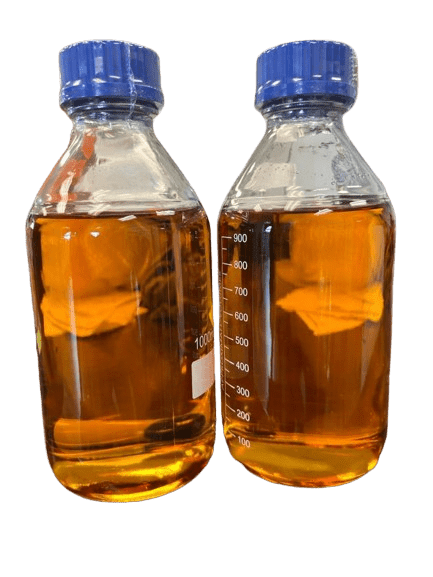
Buy Cannabinol (CBN) Cas 521-35-7
Buy Cannabinol (CBN) Cas 521-35-7
Cannabinol (CBN) is a mildly psychoactive phytocannabinoid that acts as a low affinity partial agonist at the CB1 and CB2 receptors of the endocannabinoid system (ECS).
Although CBN shares the same mechanism of action as other phytocannabinoids such as tetrahydrocannabinol (THC), it has a lower affinity for CB1 receptors, meaning that much higher doses of CBN are required in order to experience intoxicating effects.
It was the first cannabinoid to be isolated from plants of genus Cannabis and was discovered in 1896.
Pharmacology
Pharmacodynamics
Both THC and CBN activate the CB1 (Ki = 211.2 nM) and CB2 (Ki = 126.4 nM) receptors.[5] Each compound acts as a low affinity partial agonist at CB1 receptors with THC demonstrating 5x–10× greater affinity to the CB1 receptor.[5][6][7][8][9][10] Like THC, CBN has a higher selectivity for CB2 receptors[5][8] which are located throughout the central and peripheral nervous system, but are primarily associated with immune function. CB2 receptors are known to be located on immune cells throughout the body, including macrophages, T cells, and B cells. These immune cells have been shown to decrease production of immune-related chemical signals (e.g., cytokines) or undergo apoptosis as a consequence of CB2 agonism by CBN.[11] In cell culture, CBN demonstrates antimicrobial effects, particularly in instances of antibiotic-resistant bacteria.[12] CBN has also been reported to act as an ANKTM1 channel agonist at high concentrations (>20nM).[6] While some phytocannabinoids have been shown to interact with nociceptive and immune-related signaling via transient receptor potential channels (e.g., TRPV1 and TRPM8), there is currently limited evidence to suggest that CBN acts in this way.[6][13] In preclinical rodent studies, CBN, anandamide and other CB1 agonists have demonstrated inhibitory effects on GI motility, reversible via CB1R blockade (i.e., antagonism).[6]
In considering the efficacy of cannabis-based products, there remains controversy surrounding a concept termed “the entourage effect”. This concept describes a widely reported but poorly-understood synergistic effect of certain cannabinoids when phytocannabinoids are coadministered with other naturally occurring chemical compounds in the cannabis plant (e.g., flavonoids, terpenoids, alkaloids). This entourage effect is often cited to explain the superior efficacy observed in some studies of whole-plant-derived cannabis therapeutics as compared to isolated or synthesized individual cannabis constituents.[14]
Putative receptor targets
The table highlights several common cannabinoids along with putative receptor targets and therapeutic properties. Exogenous (plant-derived) phytocannabinoids are identified with an asterisk while remaining chemicals represent well-known endocannabinoids (i.e., endogenously produced cannabinoid receptor ligands).
| Full Name | Known Receptor Targets | Putative Therapeutic Properties |
|---|---|---|
| Cannabichromene (CBC) | ||
| Cannabidiol (CBD) |
|
|
| Cannabigerol (CBG) | ||
| Cannabinol (CBN) |
|
|
| Tetrahydrocannabinol (THC) / Delta-9-Tetrahydrocannabinol (Δ9-THC) |
|
|
| 2-Arachidonoylglycerol (2-AG) | ||
| Anandamide (AEA) | Anti-oxidative properties[16] |
Neurotransmitter interactions

In the brain, the canonical mechanism of CB1 receptor activation is a form of short-term synaptic plasticity initiated via retrograde signaling of endogenous CB1 agonists such as 2AG or AEA (two primary endocannabinoids). This mechanism of action is called depolarization-induced suppression of inhibition (DSI) or depolarization-induced suppression of excitation (DSE),[18] depending on the classification of the presynaptic neuron acted upon by the retrograde messenger (see diagram at left). In the case of CB1R agonism on the presynaptic membrane of a GABAergic interneuron, activation leads to a net effect of increased activity, while the same activity on a glutamatergic neuron leads to the opposite net effect. The release of other neurotransmitters is also modulated in this way, particularly dopamine, dynorphin, oxytocin, and vasopressin.[18]
Pharmacokinetics
When administered orally, CBN demonstrates a similar metabolism to Δ9-THC, with the primary intoxicating metabolite being produced through a hydroxylation reaction that occurs in the liver. The active metabolite generated via this process is called 11-OH-CBN, which is around two times as potent as CBN, and has demonstrated activity as a weak CB2 antagonist. This metabolism starkly contrasts that of standard cannabis edibles in terms of potency, given that 11-OH-THC has been reported to have 10× the potency of Δ9-THC.
Due to high lipophilicity and first-pass metabolism, there is low bioavailability of CBN and other cannabinoids following oral administration. CBN metabolism is mediated in part by CYP450 isoforms 2C9 and 3A4. The metabolism of CBN may be catalyzed by UGTs (UDP-glucuronosyltransferases), with a subset of UGT isoforms (1A7, 1A8, 1A9, 1A10, 2B7) identified as potential substrates associated with CBN glucuronidation. The bioavailability of CBN following administration via inhalation (e.g., smoking or vaporizing) is approximately 40% that of intravenous administration.
A small study of six cannabis users found a highly variable half life of 32 ± 17 hours upon intravenous administration.[19] Similar to CBD, CBN is metabolized by the CYP2C9 and CYP3A4 liver enzymes and thus the half-life is sensitive to genetic factors that effect the levels of these enzymes.[20]
Chemistry
Chemical structure
 |
This section needs more citations. (February 2026)
|
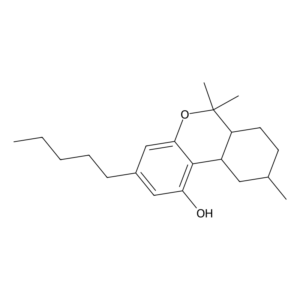
Cannabinoid receptor agonists are categorized into four groups based on chemical structure. CBN, as one of the many phytocannabinoids derived from Cannabis Sativa L, is considered a classical cannabinoid. Other examples of compounds in this group include dibenzopyran derivatives such as Δ9-THC, well-known for underlying the subjective “high” experienced by cannabis users, as well as Δ8-THC, and their synthetic analogs. In contrast, endogenously produced cannabinoids (i.e., endocannabinoids), which also exert effects through CB agonism, are considered eicosanoids, distinguished by notable differences in chemical structure.
Compared to Δ9-THC, one additional aromatic ring confers CBN with a slower and more limited metabolic profile (see § CBN Formation & Metabolism). In contrast to THC, CBN has no double bond isomers nor stereoisomers. CBN can degrade into HU-345 from exposure to air and light. In the case of oral administration of CBN, first-pass metabolism in the liver involves the addition of a hydroxyl group at C9 or C11, increasing the affinity and specificity of CBN for both CB1 and CB2 receptors (see 11-OH-CBN).
History
-
- Cayman Chemical: Offers high-purity (≥98%) crystalline solid CBN for research and forensic use through the Cayman Chemical Cannabinol Product Page.
- LGC Standards: Provides neat and solution-format CBN standards via the LGC Standards Cannabinol Catalog.
- Restek: Supplies certified reference material ampules through the Restek Cannabinol Standard Page.
- AccuStandard: Carries methanol-based CBN solutions via the AccuStandard Cannabinol Standard Page.
- Shimadzu: Provides LC/GC certified reference solutions through the Shimadzu Scientific Store. [1, 2, 3, 4, 5, 6]
-
- Intended Use: These products are labeled strictly for laboratory research, calibration, or forensic testing and are not intended for human or veterinary consumption. [1, 2]
- Regulatory Controls: CBN may be subject to local drug scheduling or controlled substance regulations depending on your jurisdiction (such as Schedule I in the United States, though specific exempt reference solutions may apply). [1]
- Shipping: Many suppliers require cold-chain shipping (e.g., on wet ice or dry ice) and specialized storage at -20°C. [1, 2]
tandards, LC, Cannabinol (CBN), 1 mg/mL Solution in Methanol, CRM
Part Number:
-
Cannabinol (CBN, NSC 134455, CAS Number: 521-35-7) | Cayman ChemicalIdentifiers: Cannabinol, CBN, NSC 134455, CAS 521-35-7, Item No. 25495, Cayman Chemical. Chemical Data: Formal Name 6,6,9-trimethy…
-
Cannabinol (CBN) | CAS 521-35-7 | LGC StandardsProduct: Cannabinol (CBN) | CAS: 521-35-7 | Catalog: DRE-C10946200 | Standard: ISO 17034 Properties: Neat format, 10 mg pack size,
-
Cannabinol (CBN) Standard (CAS 521-35-7) – AccuStandardPurchase 521-35-7, Cannabinol (CBN) Standard at 1000 µg/mL in PT Methanol – Certified Reference
Cannabinol (CBN, NSC 134455, CAS Number: 521-35-7)
CAS 521-35-7: cannabinol methanol solution
Cannabinol: CAS # 521-35-7 Compound …
Cannabinol (CBN)

Reviews
There are no reviews yet.