
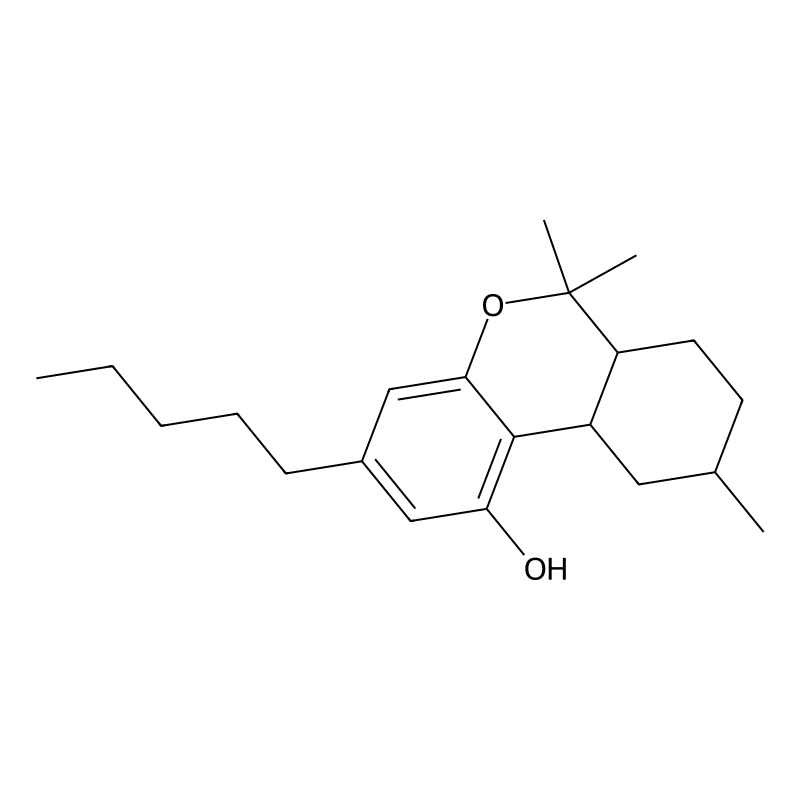
Buy Hexahydrocannabinol (HHC) Cas 6692-85-9
Buy Hexahydrocannabinol (HHC) Cas 6692-85-9
Hexahydrocannabinol (HHC) is a phytocannabinoid that has been reported as a minor component of Cannabis oleoresin.[3][4] It can also be synthesized by hydrogenation of a mixture of various tetrahydrocannabinol (THC) isomers, usually derived from hemp CBD isolate.
The synthesis and bioactivity of HHC was first reported in 1940 by Roger Adams.[5]
HHC is a psychoactive substance with effects reportedly similar to those of THC. HHC vaporizers have been openly sold at head shops and convenience stores since at least the early 2020s in North America and Europe.[6][7] While HHC has never been approved by any drug regulatory agency, a racemic mixture of epimers has shown in vitro activity against pancreatic ductal adenocarcinoma cell lines.[8]
Pharmacology
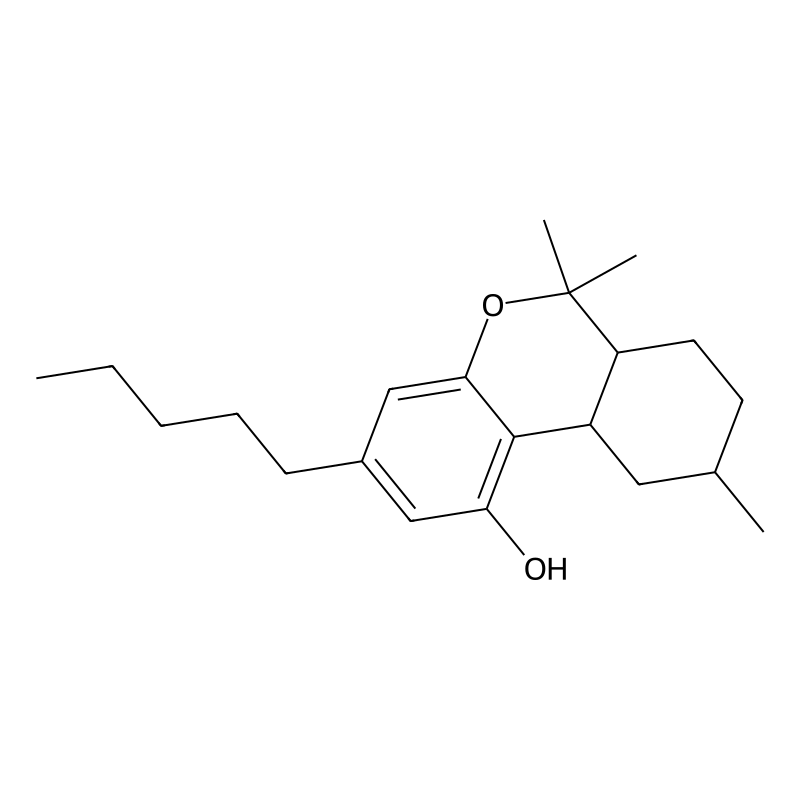
HHC has 2 diastereomers that only differ by the orientation of the 9-methyl group, unlike D9-THC and D8-THC which have the double bond position next to the 9-methyl group that prevents this. The 9-methyl group and it’s chiral orientation are believed to be important for cannabinoid receptor binding.[9]
| Site | 9R-HHC | 9S-HHC | delta-9-THC |
|---|---|---|---|
| CB1 | 15nM ± 0.8nM | 176nM ± 3.3nM | 15nM ± 4.4nM |
| CB2 | 13nM ± 0.4nM | 105nM ± 26nM | 9.1nM ± 3.6nM |
| Selectivity for CB2 | 1.2x | 1.7x | 1.6x |
| Values are Ki (nM), unless otherwise noted. The smaller the value, the more strongly the drug binds to the site. | |||
| Site | 9R-HHC | 9S-HHC | delta-9-THC |
|---|---|---|---|
| CB1 | 3.4nM ± 1.5nM | 57nM ± 19nM | 3.9nM ± 0.5nM |
| CB2 | 6.2nM ± 2.1nM | 55nM ± 10nM | 2.5nM ± 0.7nM |
| Selectivity for CB2 | 0.55x | 1.0x | 1.6x |
| Values are EC50 (nM), unless otherwise noted. The smaller the value, the more potent the drug is. | |||
HHC has been typically described as weaker than delta-9-THC in psychoactive effects. HHC produces 11-hydroxyhexahydrocannabinol and 8-hydroxyhexahydrocannabinol among others as a metabolite which may contribute to overall psychoactivity.[11][12]
Chemistry
Several research groups have successfully synthesized (+)-HHC and (-)-HHC using citronellal and olivetol,[13] as well as other related compounds.[14] While similar compounds have previously been identified in cannabis,[15] hexahydrocannabinol itself has rarely been isolated from the plant. The de Las Heras group in 2020 took lipid extract from Cannabis sativa seeds and discovered 43 cannabinoids in the crude extract; one of them being hexahydrocannabinol. It has two diastereomers at the methyl (9) position. HHC is typically made from hydrogenation of THC. There are no double bonds in the cyclohexyl ring like D8/D9 have—they have been removed from the structure and hydrogens have been added to the compound.[16][17]
Several structurally related HHC analogs have been found to be naturally occurring in Cannabis including cannabiripsol,[18] 9α-hydroxyhexahydrocannabinol, 7-oxo-9α-hydroxyhexa-hydrocannabinol, 10α-hydroxyhexahydrocannabinol, 10aR-hydroxyhexahydrocannabinol and 1′S-hydroxycannabinol,[15] 10α-hydroxy-Δ(9,11)-hexahydrocannabinol and 9β,10β-epoxyhexahydrocannabinol.[19]
HHC itself has been found as a degradation byproduct of THC in a similar way that cannabinol and delta-8-THC can be formed by the Cannabis plant from delta-9-THC degradation. The degradation of D9-THC that forms HHC is the reduction of the double carbon bonds that would typically make up the delta isomer position on THCs structure.[20][21]
Delta-9-THC was discovered to partly metabolize into 11-hydroxy-THC and alpha,10 alpha-epoxy-hexahydrocannabinol along with 1,2-epoxy-hexahydrocannabinol.[22] Cannabidiol was discovered to partly metabolize into 9α-hydroxy-HHC and 8-hydroxy-iso-HHC inside the body. In the presence of alcohol, the methoxy or ethoxy analogs such as 9-methoxy-HHC, 10-methoxy-HHC, 9-ethoxy-HHC and 10-ethoxy-HHC can be formed.[23]
Hexahydrocannabinol should not be confused with the related compounds 9-Nor-9β-hydroxyhexahydrocannabinol (9-Nor-9Beta-HHC) or 9-hydroxyhexahydrocannabinol (9-OH-HHC) or 11-hydroxyhexahydrocannabinol (11-OH-HHC and 7-OH-HHC), all of which have also sometimes been referred to as “HHC”.[citation needed]
Legality
In the United Kingdom, HHC is not scheduled under the Misuse of Drugs Act 1971 but is regarded as a psychoactive substance and therefore illegal to produce, supply, or sell under the Psychoactive Substances Act 2016.[24][25]
In Ireland, HHC was classified as an illegal drug by the Government on 29 July 2025. This was on the advice of the Health Service Executive of Ireland, which stated that “since it (HHC) was first detected in Ireland in 2022, it has been linked with episodes of psychosis and hospitalisation”.[26]
In Austria, HHC has been banned since 23 March 2023 due to the amendment of the New Psychoactive Substances Ordinance (known in German as Neue-Psychoaktive-Substanzen-Verordnung or NPSV).[27]
In France, the ANSM announced the ban on production, sale and use of HHC and two of its derivatives, HHCO and HHCP, from 13 June 2023.[28][29]
HHC has been banned in Sweden since 11 July 2023, and in Italy since 28 July 2023.[30]
In Luxembourg, Ministry of Health announced on 1 August 2023 that HHC would be regulated in that country by extending its list of psychotropic substances from 2009 to all “synthetic cannabinoid receptor agonists” and “synthetic cannabinomimetics [sic]”, with semi-synthetic cannabinoids such as HHC falling within the scope of that regulation.[31]
HHC has been banned in Lithuania since 23 November 2022, and in Slovenia since 15 November 2023.[32]
HHC has been banned in the Czech Republic since 6 March 2024.[33]
In Germany, manufacture and sale of products containing HHC and other synthetically produced cannabinoids, such as THCP and HHCP, became outlawed on 27 June 2024 (possession and consumption of those products while illegal, is not punishable). Previously, the German expert committee for narcotics had suggested that HHC be added to the annex of Novel Psychoactive Substances Act (NpSG) in a meeting on 4 December 2023.[34] This recommendation was enacted by the Bundesrat on 14 June 2024, and was published in the Bundesgesetzblatt on 26 June.
In Russia, Deputy of the Moscow City Duma Darya Besedina sent a request on 1 March 2024 to the Russian Ministry of Internal Affairs to clarify the legal status of HHC, HHCP and THCP in Russia. According to the answer from the Ministry that Besedina published, HHC and HHCP are not prohibited substances in Russia, but THCP is.[35]
In Malta, Parliamentary Secretary of Reforms and Equality Rebecca Buttigieg announced on 27 September 2024 that “all HHC products will be banned from Maltese markets.”[36]
HHC has been banned in Poland as of 14 April 2023.
See also
- 8-Hydroxyhexahydrocannabinol
- 11-Hydroxyhexahydrocannabinol
- 7,8-Dihydrocannabinol
- Cannabinol
- 9-Nor-9β-hydroxyhexahydrocannabinol
- 9-Hydroxyhexahydrocannabinol
- H4-CBD
- Hexahydrocannabihexol
- HU-243
- Canbisol
- Delta-8-THC
- Delta-10-THC
- Delta-11-THC
- Tetrahydrocannabiphorol
- THC-O-acetate
- Delta-6-Cannabidiol
Hexahydrocannabinol
Content Navigation
Hexahydrocannabinol (HHC) eliminates the thermal and oxidative instability that plagues Delta-9-THC in formulation and analytical workflows. The saturated cyclohexene ring prevents rapid conversion to CBN under heat or UV, preserving potency during distillation and long-term storage.
- Maintains a CB1 Ki of ~15 nM, comparable to Delta-9-THC, ensuring assay continuity.
- Verified high (9R)-epimer purity removes potency variability from the low-affinity (9S) isomer.
SMolecule supplies stereochemically defined HHC for reproducible pharmacology and shelf-stable product development.
CAS Number
Product Name
IUPAC Name
Molecular Formula
Molecular Weight
InChI
InChI Key
SMILES
Synonyms
Canonical SMILES
Purity
Package Size
Hexahydrocannabinol (HHC, CAS: 6692-85-9) is a hydrogenated derivative of tetrahydrocannabinol (THC) that serves as a highly stable cannabinoid scaffold for industrial formulation and pharmacological research. By saturating the cyclohexene ring found in natural THC, the hydrogenation process eliminates the carbon-carbon double bond responsible for oxidative degradation [1]. This structural modification prevents the spontaneous conversion of the molecule into cannabinol (CBN) under heat and ultraviolet light exposure[2]. For scientific and industrial buyers, HHC offers a critical procurement advantage: it maintains a receptor binding profile comparable to Delta-9-THC while delivering vastly superior thermo-oxidative stability, making it an optimal choice for extended-shelf-life applications and rigorous analytical standardization [3].
Research Fit
Substituting high-purity, stereochemically defined HHC with standard Delta-8-THC, Delta-9-THC, or crude mixed-isomer HHC introduces severe performance liabilities in both manufacturing and research. Delta-9-THC is highly susceptible to oxidation, rapidly losing potency and degrading into CBN when subjected to thermal processing or prolonged storage [1]. Conversely, while generic HHC resists oxidation, standard commercial batches often contain highly variable ratios of (9R)-HHC to (9S)-HHC, typically ranging from 0.2:1 to 2.4:1 [2]. Because the 9S epimer exhibits drastically lower binding affinity at the CB1 receptor, utilizing uncharacterized, mixed-isomer HHC in pharmacological assays or precision formulations results in unpredictable functional potency and irreproducible data [3]. Procurement must therefore prioritize HHC with verified high (9R)-epimer purity.
Substitution Risk
Thermo-Oxidative Stability
The primary industrial advantage of HHC over natural cannabinoids is its resistance to thermo-oxidative breakdown. Unlike Delta-9-THC, which contains a reactive double bond in its cyclohexene ring that serves as a primary site for oxidation, HHC is fully saturated [1]. This structural saturation completely halts the degradation pathway that converts THC into cannabinol (CBN) over time. Consequently, HHC maintains structural integrity and potency across extended distribution and high-heat processing timelines where standard THC variants would experience significant degradation [2].
| Evidence Dimension | Reactive Double Bonds (Oxidation Susceptibility) |
| Target Compound Data | 0 double bonds in the cyclohexyl ring (fully saturated) |
| Comparator Or Baseline | Delta-9-THC (1 double bond in the cyclohexene ring) |
| Quantified Difference | 100% elimination of the primary oxidative degradation site |
| Conditions | High-heat processing (distillation/edibles) and extended shelf storage |
Procuring HHC instead of THC eliminates potency loss during thermal manufacturing and extends the viable shelf-life of formulated products.
HHC Epimer CB1 Affinity
The pharmacological utility of HHC is highly dependent on its stereochemical composition. In vitro radioligand binding assays demonstrate that the (9R)-HHC epimer binds to the CB1 receptor with a Ki of 15 nM, which is comparable to the affinity of Delta-9-THC [1]. In stark contrast, the (9S)-HHC epimer exhibits a Ki of 176 nM, representing an approximately 12-fold reduction in binding affinity [2]. Furthermore, in functional assays, (9R)-HHC is 17 times more potent in activating CB1 receptors than the 9S epimer[3]. This massive discrepancy underscores the necessity of procuring stereochemically pure (9R)-HHC for reproducible research.
| Evidence Dimension | CB1 Receptor Binding Affinity (Ki) |
| Target Compound Data | (9R)-HHC: Ki = 15 nM |
| Comparator Or Baseline | (9S)-HHC: Ki = 176 nM |
| Quantified Difference | ~12-fold higher binding affinity for the 9R epimer |
| Conditions | In vitro radioligand binding assay |
-
- SMolecule HHC Standard: High-stability CB1 agonist standard formulated to resist oxidative conversion into CBN. Available directly from SMolecule for immediate global shipping. [1]
- BenchChem Hexahydrocannabinol: Isomer-verified CB1/CB2 agonist that features an analytically specified (9R):(9S) epimer ratio for reproducible laboratory applications. You can request a quote or order directly from BenchChem. [1]
- Kemcal HHC Chemical Sourcing: High-quality bulk chemical sourcing option for specific laboratory requirements. Available to order via Kemcal. [1]
-
- Eirlab Bulk HHC E-Liquid & Oil: Offers pharmaceutical-grade bulk options, including 1000ml bulk HHC oil and E-liquids formulated by scientists in an ISO-certified facility. Orders can be placed online through Eirlab. [1, 2, 3]
- Le Grossiste du CBD: Suitable if you are looking to purchase for regional distribution or retail stock. Bulk wholesale cannabinoid solutions are available through Le Grossiste du CBD. [1]
-
- Are you purchasing this for laboratory research or commercial retail production?
- What destination country or state are you shipping to? (This helps verify local legality and custom compliance).
- Do you require a specific minimum purity percentage or epimer ratio?
-
Wholesale Purchases | HHC Supplier in FranceA semi-synthetic molecule, HHC is legal and therefore authorized for both sale and consumption in France. * All you need to know a…
-
HHC (CAS 6692-85-9) | Stable CB1 Agonist StandardBuy HHC (CAS 6692-85-9) from SMolecule. High-stability CB1 agonist resistant to oxidative CBN conversion. In stock for immediate g…
-
Hexahydrocannabinol (CAS 6692-85-9) | CB1/CB2 AgonistBuy Hexahydrocannabinol (CAS 6692-85-9) from BenchChem. Isomer-verified CB1/CB2 agonist with analytically specified (9R):(9S) epim…
Hexahydrocannabinol (HHC) E-Liquid Bulk – 1000ml
Wholesale Purchases | HHC Supplier in France
Hexahydrocannabinol (CAS 6692-85-9) | CB1/CB2 Agonist
Hexahydrocannabinol – CAS 6692-85-9
HHC (CAS 6692-85-9) | Stable CB1 Agonist Standard
hhc , thc ,thcv ,d9 d10 oil for wholesale

Reviews
There are no reviews yet.