
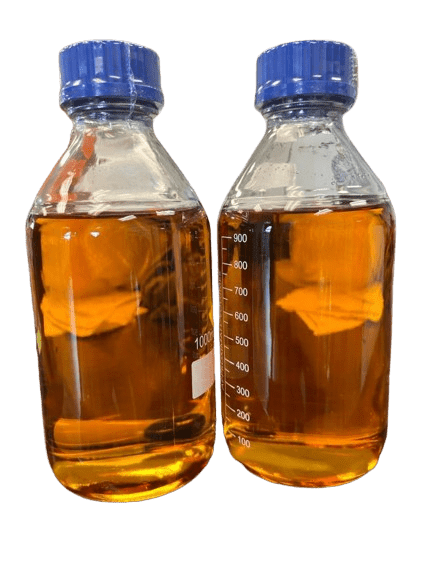
Buy Cannabichromene (CBC) Cas 20675-51-8
Cannabichromene (CBC), also called cannabichrome, cannanbichromene, pentylcannabichromene or cannabinochromene,[1] is a phytocannabinoid, one of the hundreds of cannabinoids found in the Cannabis plant.[2] It bears structural similarity to the other natural cannabinoids, including tetrahydrocannabinol (THC), tetrahydrocannabivarin (THCV), cannabidiol (CBD), and cannabinol (CBN), among others.[2][3] It is not scheduled by the Convention on Psychotropic Substances.
Biosynthesis
Within the Cannabis plant, CBC occurs mainly as cannabichromenic acid (CBCA, 2-COOH-CBC, CBC-COOH). Geranyl pyrophosphate and olivetolic acid combine to produce cannabigerolic acid (CBGA; the sole intermediate for all other phytocannabinoids), which is cyclized by the enzyme CBCA synthase to form CBCA. Over time, or when heated above 93 °C, CBCA is decarboxylated, producing CBC. See also the biosynthetic scheme image below.[citation needed]
-

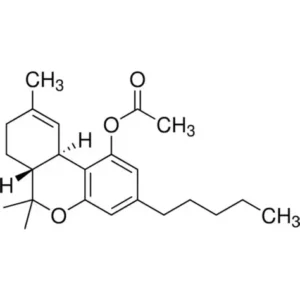
CBC biosynthetic scheme

Pharmacology
Cannabichromene has been hypothesized to affect THC psychoactivity, though in vivo effects have not been demonstrated.[4] CBC acts on the TRPV1 and TRPA1 receptors, interfering with their ability to break down endocannabinoids (chemicals such as anandamide and 2-AG that the body creates naturally).[5][unreliable source?] CBC has shown antitumor effects in breast cancer xenoplants in mice.[6] It also has anticonvulsant activity in a mouse model.[7]
In vitro, CBC binds weakly to CB1 and CB2 with binding affinities of 713nM and 256nM, respectively, which are significantly lower than that for THC with 35nM at CB1.[8][9] acting as an agonist for cAMP stimulation and an antagonist at beta-arrestin.[8] Additionally, CBC is an agonist of TRPA1, and less potently TRPV3 and TRPV4.[2] CBC has two stereoisomers.
Cannabichromene (CBC) 1000 µg/mL in Methanol
Cannabichromene 1.0mg/mL methanol, ampule 1mL, …
cannabichromene-cbc- | CAS 20675-51-8 | C-143-1ML-P
Buy CAS: 20675-51-8 | Cannabichromene (CBC) – Clinivex
cannabichromene

- CAS No.
- 20675-51-8
- Chemical Name:
- cannabichromene
- Synonyms
- Cannabichromone;Cannabichromene (CBC);Cannabichrome;cannabichromene;CANNANBICHROMENE;(±)-Cannabichromene;Pentylcannabichromene;(+/-)-Cannabichromene;Cannabichromene solution;(±)-Cannabichromene (CRM)
- CBNumber:
- CB61400957
- Molecular Formula:
- C21H30O2
- Molecular Weight:
- 314.46
- MDL Number:
- MFCD00869598
- MOL File:
- 20675-51-8.mol
- MSDS File:
- SDS
- TDS File:
- TDS
| Product description | Number | Pack Size | Price |
| Cannabichromene solution 1.0?mg/mL in methanol, ampule of 1?mL, certified reference material, Cerilliant? | C-143 | 1mL | $163 |
| (±)-Cannabichromene ≥98% | 26252 | 5mg | $75 |
| (±)-Cannabichromene (CRM) | ISO60163 | 1mg | $144 |
| (±)-Cannabichromene (Alt. Batch CRM) | 41376 | 1mg | $144 |
| (±)-Cannabichromene ≥98% | 26252 | 10mg | $129 |
| Melting point | 145°C |
|---|---|
| Boiling point | 394.13°C (rough estimate) |
| Density | 1.0536 (rough estimate) |
| refractive index | 1.5404 (estimate) |
| Flash point | 9℃ |
| storage temp. | -20°C |
| solubility | Soluble in Chloroform,Dichloromethane,Ethyl Acetate,DMSO,Acetone,etc. |
| form | Oil |
| pka | 9.68±0.40(Predicted) |
| color | Crystals |
| Major Application | cannabis testing cannabis testing |
| InChI | InChI=1S/C21H30O2/c1-5-6-7-10-17-14-19(22)18-11-13-21(4,23-20(18)15-17)12-8-9-16(2)3/h9,11,13-15,22H,5-8,10,12H2,1-4H3 |
| InChIKey | UVOLYTDXHDXWJU-UHFFFAOYSA-N |
| SMILES | C1(C)(CC/C=C(\C)/C)OC2=CC(CCCCC)=CC(O)=C2C=C1 |
| LogP | 8.560 (est) |
| FDA UNII | K4497H250W |
| UNSPSC Code | 41116107 |
| NACRES | NA.24 |
SAFETY
Risk and Safety Statements
| Symbol(GHS) |    GHS02,GHS06,GHS08 |
|||||||||
|---|---|---|---|---|---|---|---|---|---|---|
| Signal word | Danger | |||||||||
| Hazard statements | H225-H301+H311+H331-H370 | |||||||||
| Precautionary statements | P210-P260-P280-P301+P310-P311 | |||||||||
| target organs | Eyes,Central nervous system | |||||||||
| RIDADR | UN1230 – class 3 – PG 2 – Methanol, solution | |||||||||
| WGK Germany | 1 | |||||||||
| HS Code | 9999999999 | |||||||||
| Storage Class | 3 – Flammable liquids | |||||||||
| Hazard Classifications | Acute Tox. 3 Dermal Acute Tox. 3 Inhalation Acute Tox. 3 Oral Flam. Liq. 2 STOT SE 1 |
|||||||||
| Toxicity | dni-hmn:lyms 100 mmol/L FEPRA7 36,1748,77 | |||||||||
| NFPA 704 |
|
cannabichromene price More Price(22)
| Manufacturer | Product number | Product description | CAS number | Packaging | Price | Updated | Buy |
|---|---|---|---|---|---|---|---|
| Sigma-Aldrich | C-143 | Cannabichromene solution 1.0?mg/mL in methanol, ampule of 1?mL, certified reference material, Cerilliant? | 20675-51-8 | 1mL | $163 | 2026-04-30 | Buy |
| Cayman Chemical | 26252 | (±)-Cannabichromene ≥98% | 20675-51-8 | 5mg | $75 | 2026-04-30 | Buy |
| Cayman Chemical | ISO60163 | (±)-Cannabichromene (CRM) | 20675-51-8 | 1mg | $144 | 2026-04-30 | Buy |
| Cayman Chemical | 41376 | (±)-Cannabichromene (Alt. Batch CRM) | 20675-51-8 | 1mg | $144 | 2026-04-30 | Buy |
| Cayman Chemical | 26252 | (±)-Cannabichromene ≥98% | 20675-51-8 | 10mg | $129 | 2026-04-30 | Buy |
cannabichromene Chemical Properties, Uses, Production
Background
Discovered in the 1960s, cannabichromene (CBC) is the third most prominent cannabinoid found in the cannabis plant, behind CBD and THC. However, CBC remains obscure, and it’s not well understood. What is known, however, is that CBC has significant potential to treat inflammation and could be immensely useful in the reduction of pain and promoting the growth of new brain cells. CBC works in tandem with other cannabinoids like THC, CBD, CBG and CBN, which ultimately boosts their anti-inflammatory and other therapeutic effects. This contribution to the entourage effect makes CBC a very versatile cannabinoid and one that merits further study.
Description
Cannabichromene (CBC) is one of the most abundant cannabinoids found in the cannabis plant, next to CBD, THC, and CBG. It is particularly abundant in freshly harvested dry-type Cannabis material, and it is the second most abundant cannabinoid in some strains of marijuana growing in the USA. Like CBD, CBG does a poor job of binding to the endocannabinoid system’s CB1 and CB2 receptors and is a non-psychoactive compound. Instead, CBC has been observed to have unique interactions with TRPV1 and TRPA1 receptors (vanilloid 1 and ankyrin 1 receptors). It has modest antinociceptive and anti‐inflammatory effects and potentiates some effects of Δ9‐tetrahydrocannabinol in vivo[1–2].
Definition
ChEBI: Cannabichromene is a 1-benzopyran.
Biological Functions
More recently, it has been shown that cannabichromene (CBC) exerts antimicrobial, anti-inflammatory, analgesic and antidepressant-like activity in rodents. Pharmacodynamic studies have shown that CBC, like other plant natural products, is an inhibitor of endocannabinoid cellular reuptake and a weak inhibitor of monoacylglycerol lipase (MAGL) but is also a potent activator of transient receptor potential (TRP) ankyrin 1-type (TRPA1) channels. CBC was also recently found to stimulate the descending pathway of antinociception in the ventrolateral periaqueductal grey, probably through activation of TRPA1, inhibition of endocannabinoid inactivation and subsequent elevation of local endocannabinoid levels, and possibly via potentiation of adenosine signalling[3].
General Description
Cannabichromene (CBC) is a non-psychoactive cannabinoid of Cannabis that reportedly exerts anti-inflammatory, antimicrobial and analgesic activity. This Certified Snap-N-Spike solution standard is suitable for cannabichromene testing methods by GC/MS, HPLC or LC-MS/MS for Cannabis potency testing or impurity profiling, pharmaceutical research, and forensic analysis. Cerilliant solution Certified Reference Materials (CRMs) of cannabinoids are supplied in a convenient, quantitative, US DEA-exempt solution format and with TK#s for Canadian customers.
Biological Activity
Cannabichromene (CBC) is a selective CB2 receptor agonist displaying higher efficacy than tetrahydrocannabinol in hyperpolarizing AtT20 cells. CBC can also recruit CB2 receptor regulatory mechanisms. CBC may contribute to the potential therapeutic effectiveness of some cannabis preparations, potentially through CB2 receptor‐mediated modulation of inflammation[2].
Side effects
Dry Mouth: Similar to other cannabinoids, CBC can cause dry mouth. Staying hydrated can help mitigate this effect.
Fatigue: Some users feel tired after taking it, especially in higher doses. It’s advisable to start with a low dose and gradually increase it to find the optimal amount.
Digestive Issues: In rare cases, it might cause mild digestive issues such as nausea or diarrhoea. Headache: Some people might experience headaches, particularly when starting or taking higher doses.
Dizziness: Occasional dizziness can occur, especially when standing up too quickly after consuming CBC.
Safety Profile
Poison by intravenous and intraperitoneal routes. Experimental reproductive effects. Mutation data reported. Whenheated to decomposition it emits acrid smoke and irritating fumes
target
NOS | COX | ERK | ATPase
References
[1] Angelo A Izzo. “Inhibitory effect of cannabichromene, a major non-psychotropic cannabinoid extracted from Cannabis sativa, on inflammation-induced hypermotility in mice.” British Journal of Pharmacology 166 4 (2012): 1444–1460.
[2] Michael Udoh. “Cannabichromene is a cannabinoid CB2 receptor agonist.” British Journal of Pharmacology 176 23 (2019): 4537–4547.
[3] Angelo A Izzo. “Inhibitory effect of cannabichromene, a major non-psychotropic cannabinoid extracted from Cannabis sativa, on inflammation-induced hypermotility in mice.” British Journal of Pharmacology 166 4 (2012): 1444–1460.
Reviews
There are no reviews yet.