
Buy Tetrahydrocannabivarin (THCV) Cas 31262-37-0
Buy Tetrahydrocannabivarin (THCV) Cas 31262-37-0
Tetrahydrocannabivarin (THCV, THV, O-4394, GWP42004) is a homologue of tetrahydrocannabinol (THC) having a propyl (3-carbon) side chain instead of pentyl (5-carbon), making it non-psychoactive in lower doses. It has been shown to exhibit neuroprotective activity, appetite suppression, glycemic control and reduced side effects compared to THC, making it a potential treatment for management of obesity and diabetes.[1] THCV was studied by Roger Adams as early as 1942.[2]
THCV is prevalent in certain central Asian and southern African strains of Cannabis.[3][4]
Pharmacology
Mechanism of action
THCV is a somewhat selective cannabinoid receptor type 1 antagonist or, at higher doses, a CB1 receptor agonist and cannabinoid receptor type 2 partial agonist.[5] The isomer Δ8-THCV has also been shown to be a CB1 antagonist.[6] Both papers describing the antagonistic properties of THCV were demonstrated in murine models. THCV is an antagonist of CB1 receptors and lessens the psychoactive effects of THC.[7]
THCV also acts as an agonist of GPR55 and l-α-lysophosphatidylinositol (LPI), and beyond the endocannabinoid system, THCV also activate 5-HT1A receptors to produce an antipsychotic effect, that has shown therapeutic potential for ameliorating some of the negative, cognitive and positive symptoms of schizophrenia. THCV furthermore interacts with different transient receptor potential (TRP) channels including TRPV2, which may contribute to the analgesic, anti-inflammatory and anti-cancer effects of cannabinoids and Cannabis extracts. It has also shown anti-epileptiform and anticonvulsant properties, that suggest possible therapeutic application in the treatment of pathophysiologic hyperexcitability states such as untreatable epilepsy.[8]
THCV is found to inhibit the activity of both fatty acid amide hydrolase (FAAH) and monoacyl glycerol lipase (MGL), even at micromolar concentrations, and thereby able to inhibit the hydrolysis of the endocannabinoids anandamide (AEA: C22H37NO2; 20:4, ω-6) besides other N-acylethanolamines and 2-Arachidonoylglycerol (2-AG: C23H38O4; 20:4, ω-6), respectively, therefore, it can also act as an indirect agonist at the cannabinoid receptors, by enhancing the activity of the endocannabinoid system (ECS).[9][10]
Chemistry
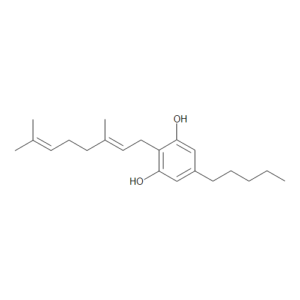
Similar to THC, THCV has 7 possible double bond isomers and 30 stereoisomers (see: Tetrahydrocannabinol#Isomerism). The alternative isomer Δ8-THCV is known as a synthetic compound with a code number of O-4395,[11] but it is not known to have been isolated from Cannabis plant material.

Synthesis
Unlike THC, cannabidiol (CBD), and cannabichromene (CBC), THCV doesn’t begin as cannabigerolic acid (CBGA). Instead of combining with olivetolic acid to create CBGA, geranyl pyrophosphate joins with divarinolic acid, which has two fewer carbon atoms. The result is cannabigerovarin acid (CBGVA). Once CBGVA is created, the process continues exactly the same as it would for THC. CBGVA is broken down to tetrahydrocannabivarin carboxylic acid (THCVA) by the enzyme THCV synthase. At that point, THCVA can be decarboxylated with heat or UV light to create THCV.[12]
Natural occurrence
Plants with elevated levels of propyl cannabinoids (including THCV) have been found in populations of Cannabis sativa L. ssp. indica (= Cannabis indica Lam.) from China, India, Nepal, Thailand, Afghanistan, and Pakistan, as well as southern and western Africa. THCV levels up to 20% of total cannabinoids have been reported.[13]
Research
Reducing blood sugar
THCV is a new potential treatment against obesity-associated glucose intolerance with pharmacology different from that of CB1 inverse agonists/antagonists.[14] GW Pharmaceuticals is studying plant-derived tetrahydrocannabivarin (as GWP42004) for type 2 diabetes in addition to metformin.[15][better source needed]
Appetite control
THC increases appetite, which is sometimes referred to as “the munchies“. THC acts as a CB1 agonist. As a CB1 antagonist, THCV has been shown to reduce appetite in murine models.[16]
Energy and motivation
A 2:1 ratio of naturally derived THCV to THC extract has been demonstrated to show energizing and motivating effects in a double blind placebo clinical study which relied on a self-reported user survey for results.[17][18]
Society and culture
Legal status
It is not scheduled by Convention on Psychotropic Substances. [citation needed]
United States
THCV is not scheduled at the federal level so long as it is not derived from cannabis varieties that produce more than .3% THC on a dry weight basis in the United States.[19]
The 2018 United States farm bill legalized the production and sale of THCV if it is derived from hemp compliant with the farm bill.[20][non-primary source needed]
See also
- Cannabinoid
- Cannabis
- Cannabivarin (CBV)
- Cannabidivarin (CBDV)
- Federal Analogue Act
- Hexahydrocannabivarin
- Medical cannabis
- Parahexyl
- Rimonabant (synthetic CB1 antagonist)
- Tetrahydrocannabiorcol (Δ9-THCC, (C1)-Δ9-THC)
- Tetrahydrocannabutol (Δ9-THCB, (C4)-Δ9-THC)
- Tetrahydrocannabihexol (Δ9-THCH, (C6)-Δ9-THC)
- Tetrahydrocannabiphorol (Δ9-THCP, (C7)-Δ9-THC)
-
- USP Store: Offers a Tetrahydrocannabivarin Solution (1 mL at 1 mg/mL concentration) for $245.00. This product is fulfilled directly through their authorized third-party provider, Cayman Chemical. [1]
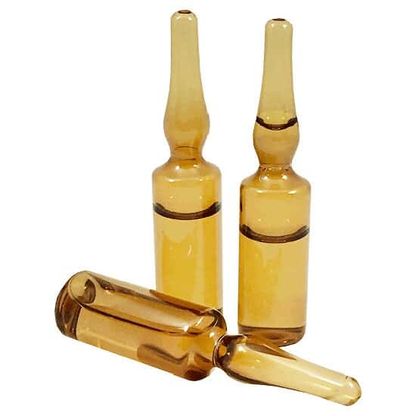
- Cerilliant: Offers a Certified Reference Material (1.0 mg/mL in Methanol, 1 mL ampoule) listed at a US price of $296.00 for sales within the US and Canada. [1]
- Cayman Chemical: Supplies Tetrahydrocannabivarin analytical standards (Item No. 30748) formulated at 10 mg/mL in methanol, as well as DEA-exempt preparation kits for analytical forensic work. [1, 2]
- Restek: Provides a Certified Reference Material (CRM) standard at a concentration of 1000 µg/mL in Methanol (1 mL/ampul). Their specific formulation is marked as DEA status exempt. [1, 2]
- LGC Standards: Provides a 1 mg/mL solution in Methanol (Catalog Number: LPM-THC-1852-1LM). [1]
-
- Chemical Formula: C₁₉H₂₆O₂ [1]
- Molecular Weight: 286.41 g/mol [1]
- Standard Form: Typically packaged in glass ampoules dissolved in chromatography-grade Methanol or Acetonitrile. [1, 2, 3]
- Storage Requirements: Must typically be stored at deep-freeze conditions (-20°C) and is shipped on wet or dry ice to preserve analytical purity. [1, 2]
-
- What country or state is your laboratory operating in?
- Do you require a DEA-exempt formulation or a full Schedule I standard?
- What concentration or volume does your testing protocol require?
-
Tetrahydrocannabivarin (CRM) (CAS 31262-37-0)Product Description Tetrahydrocannabivarin (CRM) (Item No. 18091) is a certified reference material categorized as a phytocannabin…
-
Tetrahydrocannabivarin (Δ9-Tetrahydrocannabivarin, Δ9-THCV, Δ9-THV, THCV, THV, CAS Number: 31262-37-0) | Cayman ChemicalProduct: Tetrahydrocannabivarin (Item No. 30748, CAS 31262-37-0, Δ9-THCV); Cayman Chemical analytical reference standard and synth…
-
Tetrahydro cannabivarin (THCV) Standard, 1000 µg/mL …Tetrahydro cannabivarin (THCV) Standard, 1000 µg/mL, Methanol, 1 mL/ampul ; Abbreviation: THCV ; CAS Number: 31262-37-0 ; Concentr…

Web results
CAS 31262-37-0: Tetrahydrocannabivarin
Tetrahydrocannabivarin (THCV), 1000 µg/mL
Tetrahydrocannabivarin (THCV), 1mg/ml in Methanol
tetrahydrocannabiv…
Part Number: 5191-3921

Reviews
There are no reviews yet.