
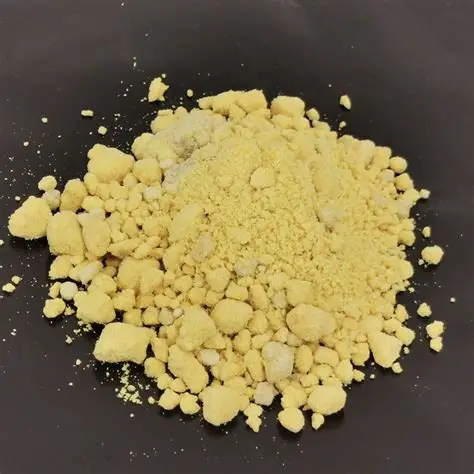
Buy AB-PINACA Cas 1445752-09-9
AB-PINACA is a compound that was first identified as a component of synthetic cannabis products in Japan in 2012.[2]
It was originally developed by Pfizer in 2009 as an analgesic medication.[3][4]
AB-PINACA acts as a potent agonist for the CB1 receptor (Ki = 2.87 nM, EC50 = 1.2 nM) and CB2 receptor (Ki = 0.88 nM, EC50 = 2.5 nM) and fully substitutes for Δ9-THC in rat discrimination studies, while being 1.5x more potent.[5][6]
There have been a number of reported cases of deaths and hospitalizations in relation to this synthetic cannabinoid.[7][8]
Legal status
Germany
AB-PINACA is an Anlage II controlled substance in Germany as of November 2014.[9]
Singapore
It is listed in the Fifth Schedule of the Misuse of Drugs Act and so is illegal in Singapore, as of May 2015.[10]
United States
It is a Schedule I controlled substance in the United States.[11]
China
It is a controlled substance in China as of October 2015.[12]
France
It is a controlled substance in France as of March 2017.[13]
See also
- 5F-AB-PINACA
- 5F-ADB
- 5F-AMB
- 5F-APINACA
- 5F-CUMYL-PINACA
- AB-CHFUPYCA
- AB-FUBINACA
- AB-PICA
- ADB-CHMINACA
- ADB-FUBINACA
- ADB-PINACA
- ADBICA
- APICA
- APINACA
- MDMB-CHMICA
- PX-3
AB-Pinaca
Forensic toxicology laboratories require compound-specific reference standards to distinguish AB-PINACA from structurally similar SCRAs and low-potency regioisomeric impurities. AB-PINACA CRM directly addresses this need.
• Enables validated LC-MS/MS & GC-MS identification using well-characterized in vivo metabolite profile (terminal amide hydrolysis and side-chain hydroxylated metabolites).
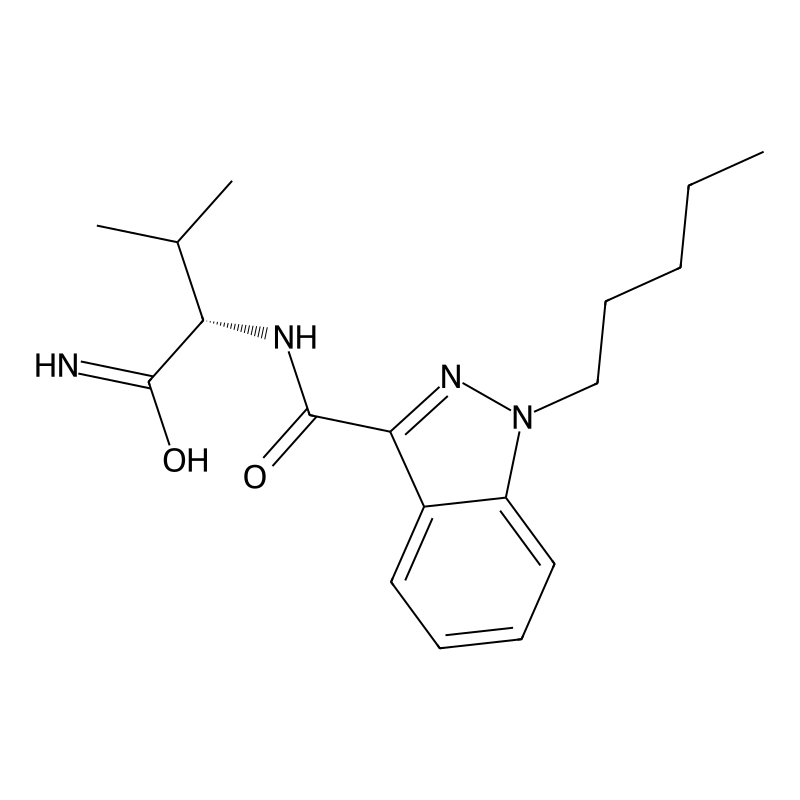
• Distinct 1-pentyl-1H-indazole structure reliably differentiates active compound from 2-alkyl-2H-indazole regioisomers exhibiting micromolar potency.
• ISO/IEC 17025 & ISO 17034 certified; DEA-exempt preparation requires no additional regulatory paperwork for qualified laboratories.
Technical Parameters
Basic Identity
| Product Name | AB-Pinaca |
|---|---|
| CAS | 1445752-09-9 |
| Synonyms |
AB-PINACA
|
| Molecular Formula | C18H26N4O2 |
| Molecular Weight | 330.4 g/mol |
Structural Identifiers
| SMILES | CCCCCN1C2=CC=CC=C2C(=N1)C(=O)NC(C(C)C)C(=O)N |
|---|---|
| InChI | InChI=1S/C18H26N4O2/c1-4-5-8-11-22-14-10-7-6-9-13(14)16(21-22)18(24)20-15(12(2)3)17(19)23/h6-7,9-10,12,15H,4-5,8,11H2,1-3H3,(H2,19,23)(H,20,24)/t15-/m0/s1 |
| InChIKey | GIMHPAQOAAZSHS-HNNXBMFYSA-N |
Commercial & Availability
| Standard Pack Sizes | 1 mg / 100 mg / 1 ml / Bulk Custom |
|---|---|
| Availability | In Stock |
| Custom Synthesis | Available on request |
Handling Information
| Appearance | Solid powder |
|---|---|
| Solubility | Soluble in DMSO |
| Storage | Dry, dark and at 0 – 4 C for short term (days to weeks) or -20 C for long term (months to years). |
Structure & Identifiers
AB-PINACA Overview
AB-PINACA (CAS 1445752-09-9) is a second-generation synthetic cannabinoid receptor agonist (SCRA) belonging to the indazole-3-carboxamide class [1]. It was originally developed by Pfizer in 2009 as an analgesic candidate but was later identified in illicit synthetic cannabis products in Japan in 2012 [1]. The compound acts as a potent, high-efficacy full agonist at both human cannabinoid type-1 (CB1) and type-2 (CB2) receptors, with reported binding affinities (Ki) of 2.87 nM for CB1 and 0.88 nM for CB2 [2]. It fully substitutes for Δ9-tetrahydrocannabinol (Δ9-THC) in rodent drug discrimination studies, demonstrating 1.5-fold higher potency [1]. Due to its potent cannabimimetic effects and association with severe adverse events including hospitalizations and fatalities, AB-PINACA is classified as a Schedule I controlled substance in the United States and is similarly controlled in many other jurisdictions [1].
Why AB-PINACA Cannot Be Substituted
The indazole-3-carboxamide class of synthetic cannabinoids, which includes AB-PINACA, AB-FUBINACA, ADB-PINACA, and 5F-AB-PINACA, exhibits profound pharmacodynamic and pharmacokinetic divergence despite their structural similarities. Subtle variations in the N-alkyl substituent (e.g., pentyl vs. 5-fluoropentyl) and the pendant amino acid side chain (e.g., valinamide vs. tert-leucinamide) result in significant, non-linear differences in CB1 receptor binding affinity, functional potency, intrinsic efficacy, and metabolic stability [1]. For instance, the 5-fluoro analog 5F-AB-PINACA exhibits a distinct metabolic pathway involving oxidative defluorination, producing a metabolite profile that differs substantially from that of AB-PINACA, which is critical for forensic toxicology [2]. Furthermore, AB-PINACA’s specific profile of cytochrome P450 enzyme inhibition differs markedly from that of the closely related analog AB-FUBINACA, leading to different risks of drug-drug interactions [3]. Consequently, data generated with one SCRA in this class cannot be reliably extrapolated to another. For rigorous, reproducible research, particularly in forensic science, toxicology, and receptor pharmacology, the use of the specific compound of interest, validated against certified reference materials, is an absolute necessity.
5-Fluoro analogs produce divergent primary metabolites, altering forensic detection targets.
AB-FUBINACA and other indazole-3-carboxamides may exhibit distinct CYP isoform inhibition, requiring compound-specific interaction review.
AB-PINACA Differentiation Evidence
CB1 Receptor Functional Efficacy
AB-PINACA demonstrates significantly higher functional efficacy at the human CB1 receptor compared to both the partial agonist Δ9-THC and the prototypical full agonist CP-55,940. In a [35S]GTPγS binding assay using CHO-hCB1 cell membranes, AB-PINACA produced a maximal G-protein activation (EMAX) of 71.9 ± 5.8%, which is significantly greater than that of Δ9-THC (39.0 ± 2.7%) and also exceeds that of CP-55,940 (64.0 ± 3.8%) [1]. This indicates that AB-PINACA is a ‘super-agonist’ in this functional readout, a property that may contribute to its pronounced in vivo toxicity relative to cannabis [1].
Adenylyl Cyclase Inhibition Potency
In an assay measuring the inhibition of adenylyl cyclase activity, a downstream effector pathway for CB1 receptors, AB-PINACA demonstrated significantly higher potency than both Δ9-THC and the synthetic full agonist CP-55,940. The IC50 for AB-PINACA was 3.9 nM, compared to 68.8 nM for Δ9-THC and 16.3 nM for CP-55,940 [1]. This indicates a 17.6-fold greater potency than Δ9-THC and a 4.2-fold greater potency than CP-55,940 in this specific signaling pathway [1].
Primary Metabolite Profile vs 5F-Analog
AB-PINACA and its 5-fluoro analog, 5F-AB-PINACA, undergo distinct primary metabolic pathways. In vitro incubation with pooled human hepatocytes revealed that the primary metabolite for AB-PINACA is AB-PINACA carboxylic acid, produced via terminal amide hydrolysis [1]. In contrast, the primary metabolites for 5F-AB-PINACA are AB-PINACA pentanoic acid and 5-hydroxypentyl-AB-PINACA, resulting from oxidative defluorination [1]. This fundamental difference in biotransformation has direct implications for forensic analysis, as the choice of analytical targets for confirming drug use differs between the two compounds.
CYP Inhibition Profile vs AB-FUBINACA
AB-PINACA and its close structural analog AB-FUBINACA exhibit distinct inhibitory profiles against major human cytochrome P450 (CYP) enzymes, suggesting different potential for drug-drug interactions. AB-PINACA was found to reversibly inhibit CYP2C8 (Ki = 16.9 µM), CYP2C9 (Ki = 6.7 µM), and CYP2C19 (Ki = 16.1 µM), and showed time-dependent inhibition of CYP3A4 (Ki = 17.6 µM) [1]. In contrast, AB-FUBINACA inhibited CYP2B6 (Ki = 15.0 µM), CYP2C8 (Ki = 19.9 µM), CYP2C9 (Ki = 13.1 µM), CYP2C19 (Ki = 6.3 µM), and CYP2D6 (Ki = 20.8 µM), but did not significantly inhibit CYP3A4 [2].
In Vivo Metabolite Profile in Human Tissues
A comprehensive in vivo metabolite profile for AB-PINACA has been established using solid tissues (lung, liver, kidney) and urine from a fatal abuse case, and compared directly with in vitro human hepatocyte data [1]. Thirteen distinct metabolites were characterized, produced by terminal amide hydrolysis, hydroxylation, carbonyl formation, and/or glucuronidation [1]. Crucially, the study identified that the most abundant metabolite in hepatocytes, lung, and liver was the terminal amide hydrolysis product, whereas the predominant metabolite in kidney and urine was produced by hydroxylation or carbonyl formation on the pentyl side chain after hydrolysis [1]. This tissue-specific distribution of metabolites is vital for interpreting postmortem forensic findings.
AB-PINACA Use Cases
Forensic Toxicology Confirmation
AB-PINACA certified reference material (CRM) is essential for the development and validation of confirmatory analytical methods (e.g., LC-MS/MS, GC-MS) used by forensic toxicology laboratories. Its unique and well-characterized in vivo metabolite profile, particularly the tissue-specific distribution of the terminal amide hydrolysis product and side-chain hydroxylated metabolites, makes it a critical standard for accurately identifying AB-PINACA exposure in biological specimens from forensic casework [1].
Cannabinoid Receptor Signaling Research
Researchers investigating the complexities of CB1 receptor signaling and the structural determinants of cannabinoid efficacy require AB-PINACA as a key tool compound. Its demonstrated high intrinsic efficacy for G-protein activation (EMAX = 71.9 ± 5.8%) and superior potency for adenylyl cyclase inhibition (IC50 = 3.9 nM) compared to Δ9-THC and CP-55,940 [2] make it an ideal reference agonist for studying biased signaling, receptor desensitization, and the mechanisms underlying SCRA-induced toxicity.
Drug-Drug Interaction and Metabolism Studies
AB-PINACA is a valuable probe substrate for investigating potential drug-drug interactions and metabolic pathways in vitro. Its specific and well-defined inhibitory effects on CYP2C8, CYP2C9, CYP2C19, and CYP3A4 enzymes [3] allow researchers to model and predict the pharmacokinetic consequences of SCRA co-administration with other drugs. Furthermore, its distinct metabolic fate compared to its 5-fluoro analog [4] provides a clear model system for studying the impact of fluorination on xenobiotic biotransformation.
Regioisomer Impurity Reference Standards
AB-PINACA is a key compound for forensic chemists working on the analysis of illicit drug seizures. The compound’s 1-pentyl-1H-indazole structure is distinct from its 2-alkyl-2H-indazole regioisomer, a potential manufacturing impurity with dramatically lower (micromolar) potency at CB1 and CB2 receptors [5]. Access to a certified AB-PINACA standard is critical for developing and validating GC-MS methods that can reliably differentiate the active compound from inactive or low-potency regioisomeric impurities found in clandestine preparations [5].
AB-Pinaca
Content Navigation
Forensic and toxicology labs require the exact AB-PINACA standard for legally defensible identification, not surrogates like 5F-AB-PINACA. This high-purity reference material enables:
- Definitive GC-MS retention time windows (e.g., 3.092 min on DB-200 columns) and carboxamide cleavage fragmentation patterns.
- Calibration of HLM clearance models with an 18.7-minute half-life as baseline.
- Accurate quantification of receptor binding impacts (low nanomolar EC50) for indazole-3-carboxamide analogs.
Ships globally under controlled substance compliance.
CAS Number
Product Name
IUPAC Name
Molecular Formula
Molecular Weight
InChI
InChI Key
SMILES
solubility
Synonyms
Canonical SMILES
Isomeric SMILES
Purity
Package Size
AB-PINACA is a synthetic indazole-3-carboxamide cannabinoid receptor agonist that serves as a critical baseline standard in forensic toxicology, metabolic profiling, and pharmacological receptor assays [1]. Unlike early-generation naphthoylindoles, AB-PINACA features an L-valinamide side chain and an indazole core, giving it distinct thermal degradation pathways, receptor binding kinetics, and enzymatic clearance profiles [1]. For analytical testing facilities and research organizations, procuring high-purity AB-PINACA is essential for establishing accurate chromatographic retention times, mass spectrometric fragmentation libraries, and baseline in vitro metabolic clearance rates before evaluating halogenated or structurally modified analogs.
Research Fit
CB1/CB2 cannabinoid receptor binding and functional study fit
Cannabimimetic drug discrimination model research context
Indazole-3-carboxamide class certified analytical reference workflow
Substituting AB-PINACA with closely related analogs, such as its fluorinated derivative (5F-AB-PINACA) or the tert-butyl variant (ADB-PINACA), critically compromises analytical and pharmacological workflows [1]. A single fluorine substitution on the pentyl chain nearly doubles the in vitro half-life in human liver microsomes (HLM) and fundamentally alters the primary metabolic excretion profile, shifting it toward oxidative defluorination [1]. Furthermore, in gas chromatography-mass spectrometry (GC-MS), these structural variations shift retention times and alter carboxamide cleavage patterns[2]. Consequently, forensic and toxicological laboratories cannot use class-level surrogates; exact compound procurement is mandatory for legally defensible identification and accurate pharmacokinetic modeling.
Substitution Risk
Pentyl indazole-3-carboxamide with valinamide side chain; distinct CB1/CB2 pharmacodynamic profile
N-alkyl or amino acid side chain variations produce non-linear shifts in receptor binding and intrinsic efficacy
Key risk: Metabolic pathway divergence. 5F-AB-PINACA undergoes oxidative defluorination; AB-PINACA favors terminal amide hydrolysis. Forensic metabolite targets may not transfer between analogs.
Additional risk: CYP inhibition profile differs markedly from AB-FUBINACA, including time-dependent CYP3A4 inhibition unique to AB-PINACA. Drug-drug interaction study context may not transfer.
References
- [1] Wohlfarth, A., et al. ‘Pentylindole/Pentylindazole Synthetic Cannabinoids and Their 5-Fluoro Analogs Produce Different Primary Metabolites: Metabolite Profiling for AB-PINACA and 5F-AB-PINACA.’ The AAPS Journal 17.3 (2015): 660-677.
- [2] Sisco, E., et al. ‘A Framework for the Development of Targeted Gas Chromatography Mass Spectrometry (GC-MS) Methods: Synthetic Cannabinoids.’ Journal of Forensic Sciences 66.5 (2021): 1891-1903.
Half-Life and Hepatic Clearance
In human liver microsome (HLM) assays, AB-PINACA exhibits an in vitro half-life of 18.7 ± 0.4 minutes and an intrinsic clearance (CLint) of 35 mL/min/kg [1]. In direct contrast, its fluorinated analog, 5F-AB-PINACA, demonstrates a significantly prolonged half-life of 35.9 ± 3.0 minutes and a reduced intrinsic clearance of 18 mL/min/kg [1]. This nearly two-fold difference in metabolic stability highlights the distinct enzymatic processing of the unfluorinated pentyl chain.
| Evidence Dimension | In vitro half-life (HLM) and Intrinsic Clearance (CLint) |
| Target Compound Data | T1/2 = 18.7 min; CLint = 35 mL/min/kg |
| Comparator Or Baseline | 5F-AB-PINACA (T1/2 = 35.9 min; CLint = 18 mL/min/kg) |
| Quantified Difference | 1.9x faster half-life and 1.94x higher intrinsic clearance for AB-PINACA |
| Conditions | 1 μmol/L compound incubated with human liver microsomes for up to 1 hour |
Toxicology labs must procure the exact AB-PINACA standard to accurately calibrate metabolic screening models and identify specific non-fluorinated urinary metabolites.
EMAX 71.9 ± 5.8%
1.84-fold higher response; [35S]GTPγS assay, CHO-hCB1 membranes
Reported super-agonist profile context in G-protein activation readout
N=10 vs N=7; single assay platform
GC-MS Retention Time Resolution
In targeted GC-MS frameworks utilizing an isothermal temperature program on a DB-200 column, AB-PINACA elutes at a highly specific retention time of 3.092 (±0.004) minutes [1]. This allows baseline resolution from closely related synthetic cannabinoids such as MDMB-FUBINACA (3.143 min) and legacy compounds like JWH-203 (3.498 min) [1]. The precise retention data underscores the necessity of the exact standard for calibrating forensic screening panels where co-elution of structural isomers or analogs is a major risk.
| Evidence Dimension | GC-MS Retention Time |
| Target Compound Data | 3.092 ± 0.004 min |
| Comparator Or Baseline | MDMB-FUBINACA (3.143 ± 0.012 min) |
| Quantified Difference | 0.051 minute retention time shift |
| Conditions | DB-200 column, isothermal temperature program, targeted synthetic cannabinoid panel |
Procurement of the exact AB-PINACA standard is critical for establishing legally defensible retention time windows in high-throughput forensic drug screening.
IC50 3.9 nM
17.6-fold vs Δ9-THC (68.8 nM); 4.2-fold vs CP-55,940 (16.3 nM)
cAMP assay, CHO-hCB1 cells, N=6
Reported cAMP pathway potency context
Supports signal transduction endpoint review
CB1 Potency vs. Naphthoylindoles
AB-PINACA is a highly potent indazole-3-carboxamide, exhibiting CB1 receptor activation potencies (EC50 in the low nanomolar range, typically ~1.2-2 nM in fluorometric membrane potential assays) that drastically exceed those of first-generation naphthoylindoles [1]. For instance, legacy benchmarks like JWH-018 exhibit EC50 values around 18-46 nM[1]. The L-valinamide side chain and indazole core of AB-PINACA drive this >10-fold increase in potency, making it an essential reference material for mapping the structure-activity relationships (SAR) of third-generation synthetic cannabinoids.
| Evidence Dimension | CB1 Receptor Activation Potency (EC50) |
| Target Compound Data | Low nanomolar EC50 (~1.2-2 nM) |
| Comparator Or Baseline | JWH-018 (EC50 ~18-46 nM) |
| Quantified Difference | >10-fold higher potency for the indazole carboxamide core |
| Conditions | Fluorometric assay of membrane potential (GIRK channel activation / hyperpolarization) |
Pharmacological research organizations require AB-PINACA to establish accurate baseline potency metrics for indazole-based cannabinoid receptor agonists.
Pooled human hepatocytes, 10 µM, 3h, LC-HRMS
Qualitative metabolic route divergence; forensic target selection context
Different analytical targets required for each compound
AB-PINACA
Price range: €115.00 through €1,100.00
AB-PINACA is a synthetic cannabinoid reference standard, identified chemically as N-[(2S)-1-amino-3-methyl-1-oxobutan-2-yl]-1-pentyl-1H-indazole-3-carboxamide. It is commonly used in forensic and analytical laboratories for method development, calibration, and confirmatory testing. The compound has molecular formula C18H26N4O2 and is typically prepared in methanol or other polar organic solvents for LC-MS/MS or GC-MS workflows. Its use is strictly limited to laboratory research and toxicology applications.unodc+1
Key Points
-
Synthetic cannabinoid research chemical.
-
Supplied as a high-purity analytical reference standard.
-
Molecular formula: C18H26N4O2.
-
CAS number: 1445752-09-9.
-
Soluble in methanol and compatible with polar organic solvents.
-
Suitable for LC-MS/MS, GC-MS, HPLC calibration and validation.
-
Intended exclusively for forensic and analytical research.
⚠️ DISCLAIMER:
This product is sold strictly for laboratory and research purposes only. It is NOT intended for human or veterinary consumption, diagnostic use, or any application involving living organisms. All customers must be qualified and trained laboratory professionals. Buyer assumes all responsibility for safe handling, storage, and legal compliance in accordance with their local, state, and federal regulations. Always use appropriate personal protective equipment (PPE) and work within a properly ventilated fume hood.
Overview
AB-PINACA is the common catalog name for N-[(2S)-1-amino-3-methyl-1-oxobutan-2-yl]-1-pentyl-1H-indazole-3-carboxamide, a synthetic cannabinoid reference material with CAS number 1445752-09-9 and molecular formula C18H26N4O2. It is an indazole-based aminoalkyl carboxamide compound used in controlled laboratory environments for analytical and forensic investigation. In research settings, it is typically treated as a potent CB1/CB2 receptor agonist standard for method development and confirmatory analysis.unodc+2
Chemical & Physical Properties
AB-PINACA is commonly handled as a neat solid or as a certified reference solution for calibration workflows. For analytical preparation, polar organic solvents such as methanol are typically used to prepare stock solutions for LC-MS/MS or GC-MS applications.sigmaaldrich
Primary Research Applications
AB-PINACA is used as an analytical reference standard in forensic toxicology, clinical toxicology, and analytical chemistry. It supports LC-MS/MS and GC-MS method development, calibration, validation, and confirmatory testing of synthetic cannabinoid panels. The compound is also relevant to receptor-binding and metabolite profiling studies in neuropharmacology and metabolomics research. In all cases, it is intended strictly for laboratory investigation and not for human or veterinary use.pmc.ncbi.nlm.nih+1
Storage & Stability
For best stability, keep containers well sealed and minimize repeated freeze-thaw or ambient exposure during use. Maintain controlled documentation, batch traceability, and QC checks before analytical deployment.
Closing Statement
AB-PINACA is supplied for research-use-only workflows in properly equipped laboratory environments. Product specifications, COA data, and analytical documentation should be reviewed before use to support traceability and method quality. Handling should remain within internal safety procedures and applicable regulatory requirements.
⚠️ DISCLAIMER:
This product is sold strictly for laboratory and research purposes only. It is NOT intended for human or veterinary consumption, diagnostic use, or any application involving living organisms. All customers must be qualified and trained laboratory professionals. Buyer assumes all responsibility for safe handling, storage, and legal compliance in accordance with their local, state, and federal regulations. Always use appropriate personal protective equipment (PPE) and work within a properly ventilated fume hood.
-
AB-PINACA | 1445752-09-9 – ChemicalBook
May 28, 2026 · AB-PINACA (CAS 1445752-09-9) information, including chemical properties, structure, melting point, boiling point, …
-
AB-PINACA 100ug/mL methanol, certified reference … – MilliporeSigma
Find documentation for the products that you have recently purchased in the Document Library.
Buy Online CAS Number 1445752-09-9 – TRC – AB-PINACA | LGC …
Purchase online CAS Number 1445752-09-9 – TRC – AB-PINACA. High Quality CRMs, Reference Materials, Proficiency Testing & More …
-
Buy AB-PINACA Online: Top Quality Reference Material Available
Buy AB-PINACA chemical at Chemsfine for your research needs. This high-purity synthetic cannabinoid is available as a certified …
-
AB-PINACA – Raw Chems
CAS number: 1445752-09-9. Soluble in methanol and compatible with polar organic solvents. Suitable for LC-MS/MS, GC-MS, HPLC …
-
Buy AB-Pinaca | 1445752-09-9 | >98%
AB-Pinaca is a synthetic cannabinoid compound with diverse applications in scientific research.This chemical exhibits promising …
-
Buy Online CAS Number 1445752-09-9 – TRC – AB-PINACA (1 mg/mL in …
Purchase online CAS Number 1445752-09-9 – TRC – AB-PINACA (1 mg/mL in Methanol). High Quality CRMs, Reference Materials, …
-
Buy AB-Pinaca | 1445752-09-9 | BenchChem
Benchchem offers qualified products for CAS No. 1445752-09-9 (AB-Pinaca), please inquire us for more detail.
-
Buy AB-PINACA in USA & Canada | CAS: 1445752-09-9 | C18 H26 N4 O2
Buy AB-PINACA, (CAS: 1445752-09-9) online in USA & Canada. High-purity certified reference material supported by full technical …
-
AB-PINACA – Chemizica Lab
AB-PINACA (Item No. 14038) is an analytical reference material categorized as a cannabinoid. 1 AB-PINACA is regulated as a …
Reviews
There are no reviews yet.